

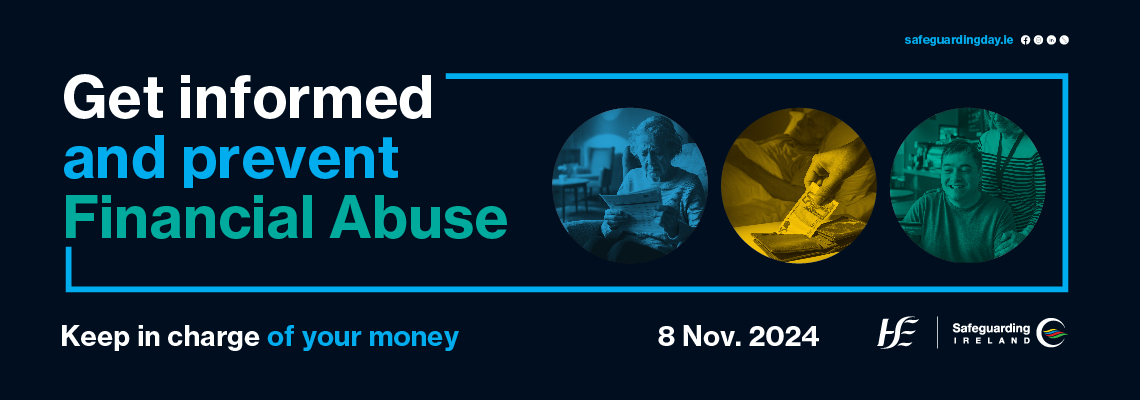
Summary – PREVENT Financial Abuse
- Keep in control of money, property and social welfare benefits as much as possible
- Avoid sharing a bank card and pin number, account number, or access to online banking
- If help is needed – first ask for advice from your bank, An Post or Credit Union
- If help is needed with day-to-day spending – choose only a really trusted person and limit their access
- Ask the person for receipts and get monthly account statements
- Plan for the future by making an Enduring Power of Attorney.
Safeguarding and Adult Abuse
Safeguarding means putting measures in place to uphold rights, support health and wellbeing, reduce risk of harm – and empower people to protect themselves.
Adult abuse happens when a person’s rights, independence, or dignity are not respected. This can be deliberate, or caused by a lack of knowledge, or omission of care. However, all circumstances of not respecting a person’s rights are abuse and in some cases a serious crime.
There are many forms of abuse including – financial, emotional and psychological, physical, sexual, organisational, online, neglect, coercive control, or discrimination.
Approximately 14,000 cases of alleged abuse, and 1,500 cases of financial abuse, are reported to the HSE Safeguarding and Protection Teams each year, although the actual figures (what is not reported) are thought to be much higher.
About Financial Abuse
Financial abuse is a serious form of abuse and is particularly common among older people.
While the majority of people are honest, it has been estimated internationally that one in ten people are dishonest in how they manage another person’s money, or property.
Surprisingly, a significant amount of financial abuse is carried out by people known to the victim. This can involve people well known – a family member, carer, neighbour, worker, or social welfare Agent doing the following:
- Keeping change, or taking cash that is around the house
- Misusing a bank card, or online banking
- Being dishonest about social welfare payments
- Using property or possessions without agreement or permission
- Threatening withdrawal of care unless a person complies with money or property demands
- Pressurising to change a Will, property deeds, or Enduring Power of Attorney.
It could be that the person committing the abuse has themselves a money difficulty, gambling problem, or addiction.
To keep safe from this abuse – there is a need to plan managing money in the future, particularly if a person is likely to face challenges with capacity.
There is also a risk of online financial fraud and scams, but this campaign is focused on the form of financial abuse when the abuser is known to the person.
Tips to prevent and reduce Financial Abuse
- Keep in control of money, property and social welfare benefits as much as possible
- Avoid sharing a bank card and pin number, account number, or access to online banking
- If help is needed – first ask for advice from the bank, An Post or Credit Union
- If help is needed with day-to-day spending, choose only a really trusted person and limit their access
- Ask for receipts and get monthly account statements
- Plan for the future by making an Enduring Power of Attorney.
- If independent advice is needed – contact the Money Advice and Budgeting Service (MABS), the National Advocacy Service (NAS), or Sage Advocacy
- Make a Will – set out what to happen to money and property after death.
Tips for organisations and services
- Train staff – to support needs of vulnerable customers, to spot financial abuse and to take action
- Implement the Assisted Decision-Making (Capacity) Act – support all customers as much as possible to make their own decisions
- Increase checks and balances – the Department of Social Protection, banks, An Post and Credit Unions should strengthen checks to identify financial abuse and fraud.
Who to Contact about Financial Abuse
If suffering financial abuse, or concerned about someone, take action and report it.
- If there is a serious and immediate danger, call the Gardaí at 999 or 112
- If financial abuse is ongoing, report it urgently to the local Garda station (directory at www.garda.ie), or call the confidential line at 1800 666 111
- If there are unexplained changes in spending – contact the bank, An Post, or local branch of the Credit Union
- For an ongoing financial safeguarding issue contact the regional HSE Safeguarding Team. Email socialcare@hse.ie, or see www.hse.ie/safeguarding.
Contact your Financial Provider
- AIB – 0818 227 056
- Bank of Ireland – 1800 946 146
- PTSB – 0818 818 721
- An Post – 01 705 8000
- Credit Unions – contact your local branch see www.creditunion.ie/contactus/
- Dept. of Social Protection (social welfare payments) – 071 919 3259
Get Independent Advice
- Money Advice and Budgeting Service – www.mabs.ie / 0818 07 2000
- National Advocacy Service – www.advocacy.ie / 0818 07 3000
- Sage Advocacy – www.sageadvocacy.ie / 01 536 7330
Plan Ahead
- Make an Enduring Power of Attorney – talk with your trusted person and Solicitor
- Decision Support Service – www.decisionsupportservice.ie / or 01 211 9750.
2024 – Videos on Financial Abuse
Understanding – Financial Abuse
Forms of – Financial Abuse
Tips to Prevent – Financial Abuse
Safe Banking – Financial Abuse
An EPA and Safe Banking – Financial Abuse
Make an Enduring Power of Attorney – Financial Abuse
Booklet and Posters
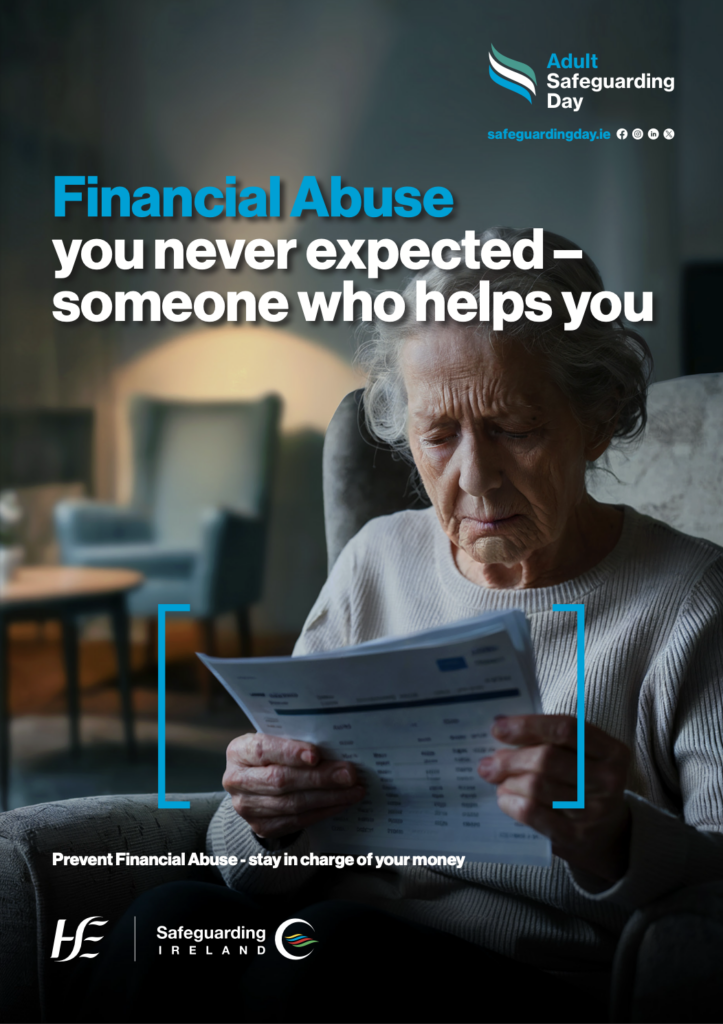
READ / Download the Booklet
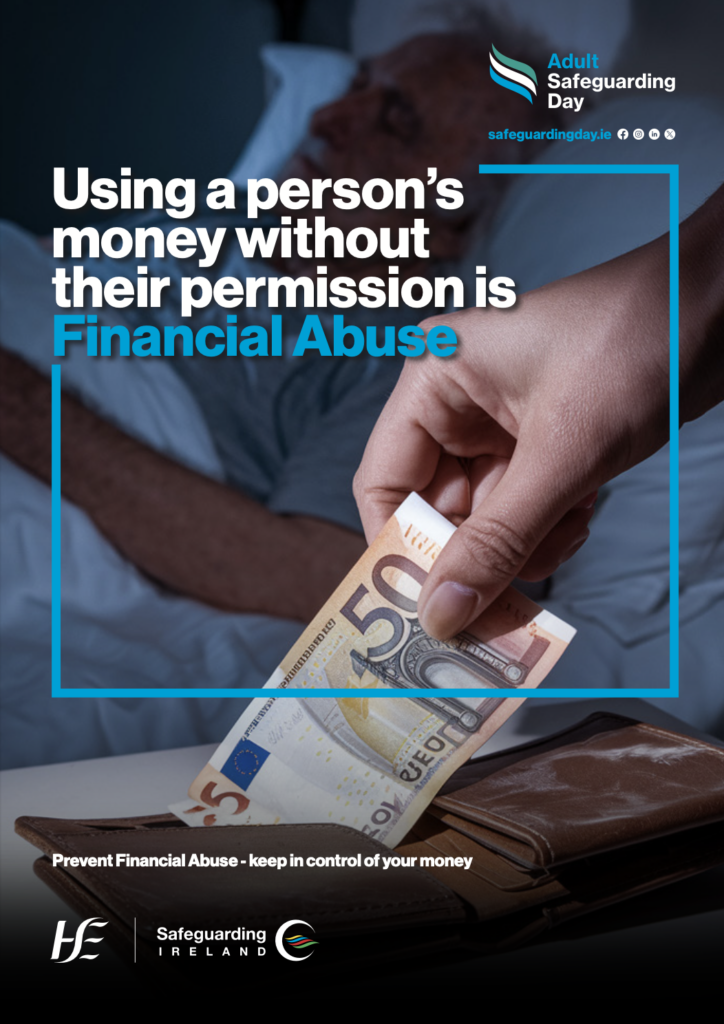
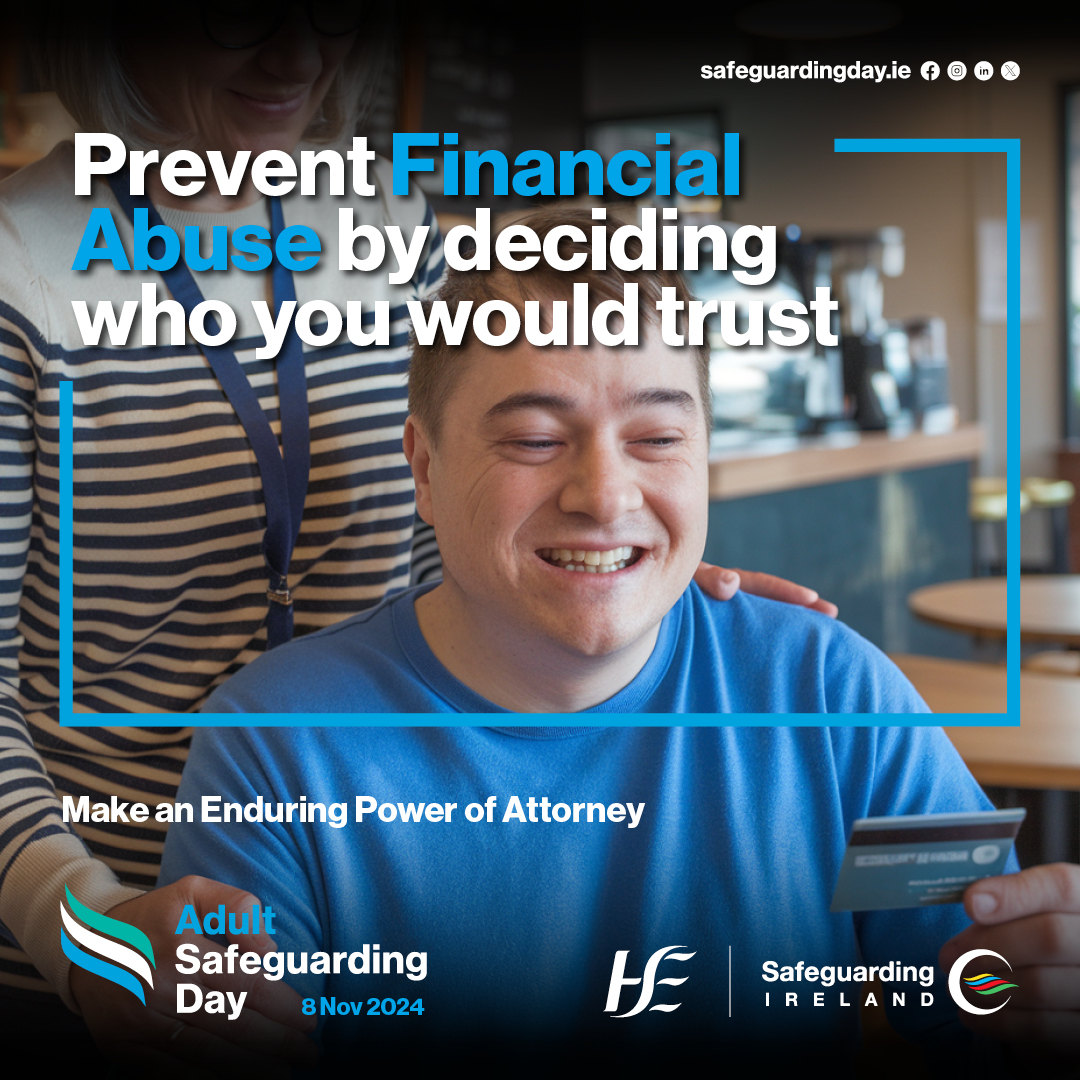
Poster 1
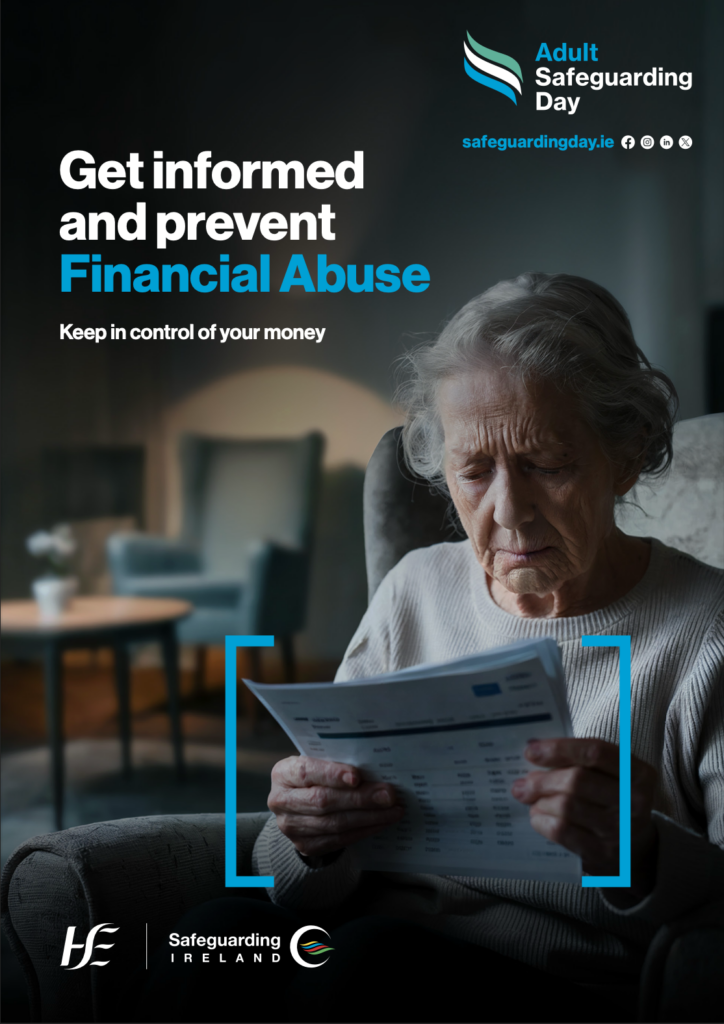
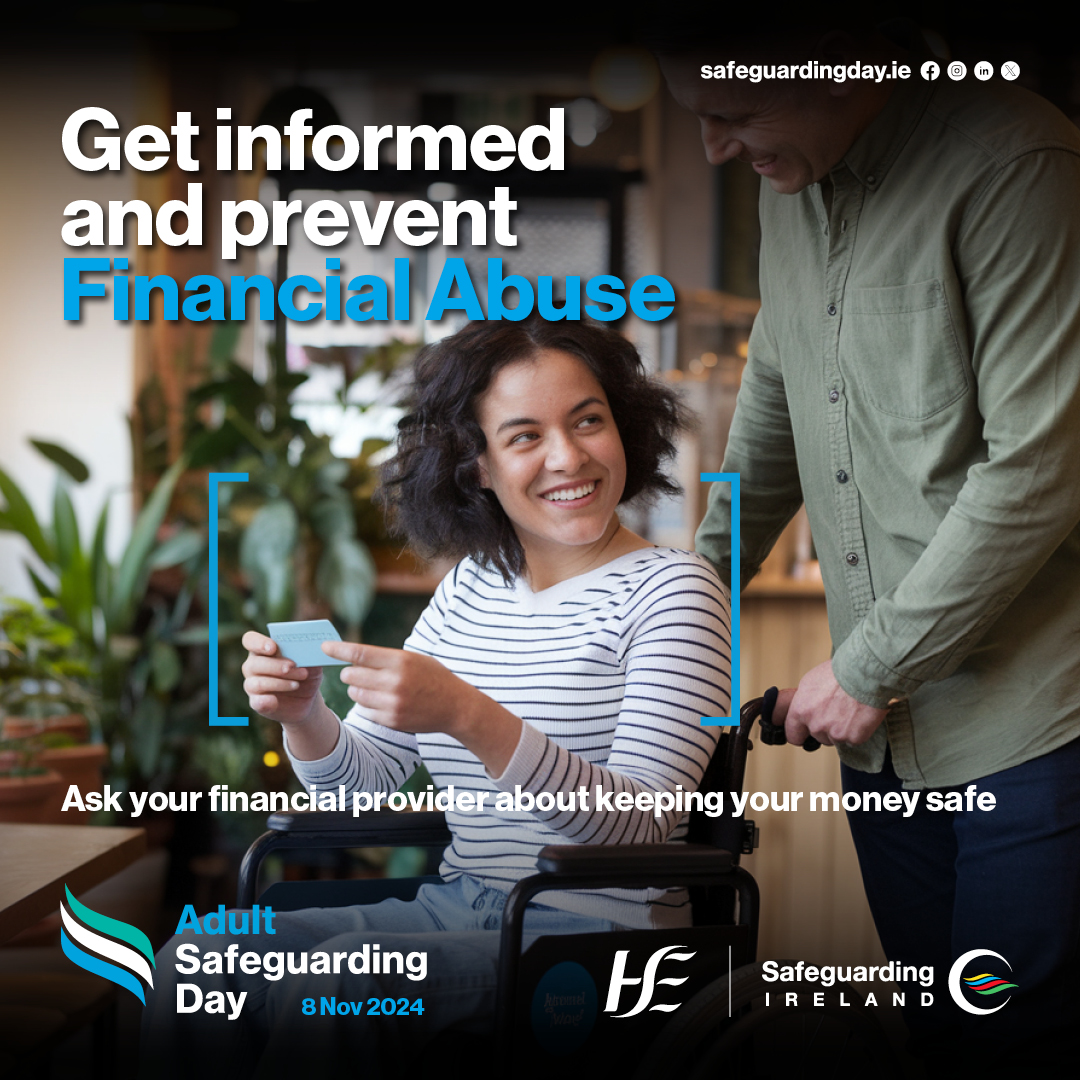
Poster 2
Social Media
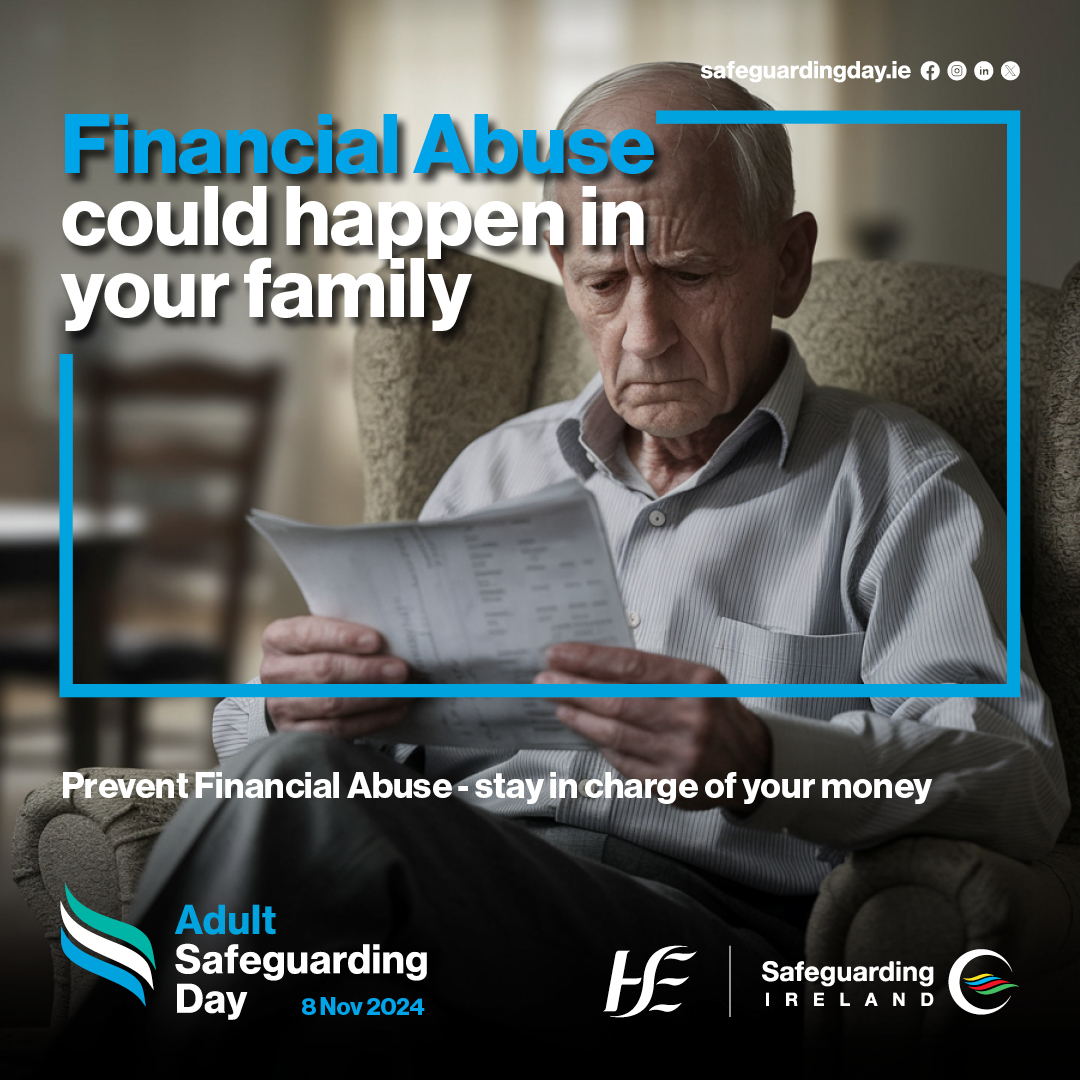
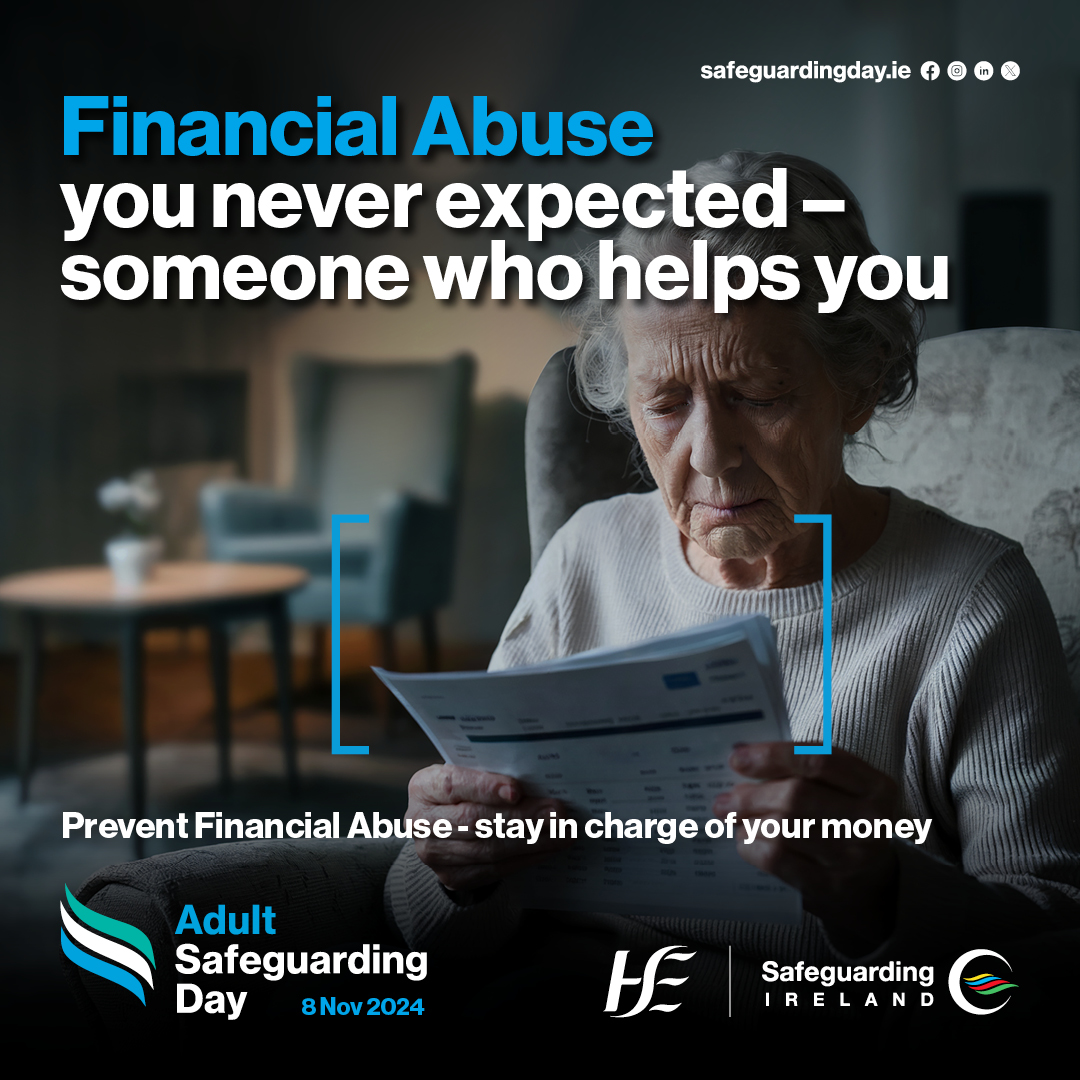
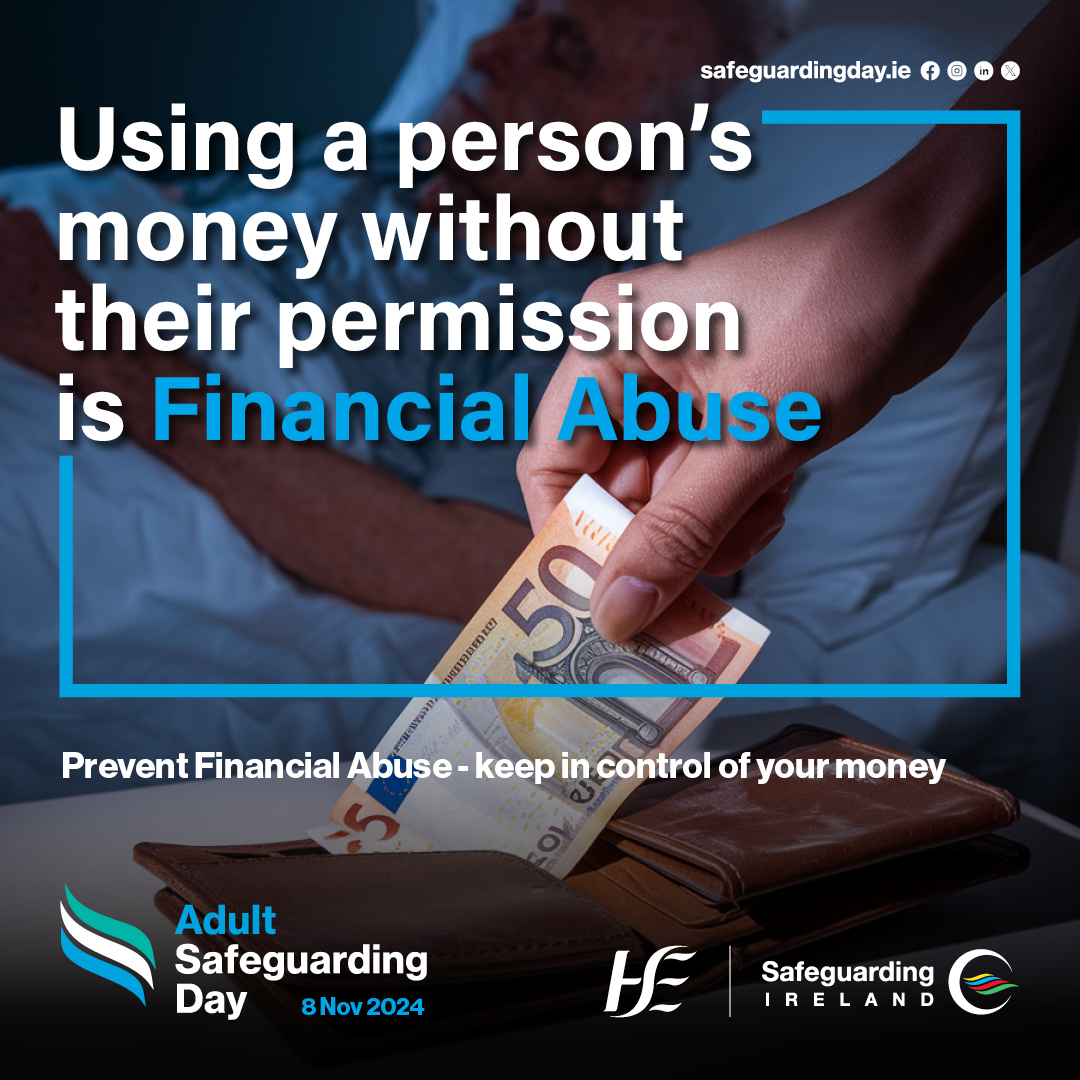
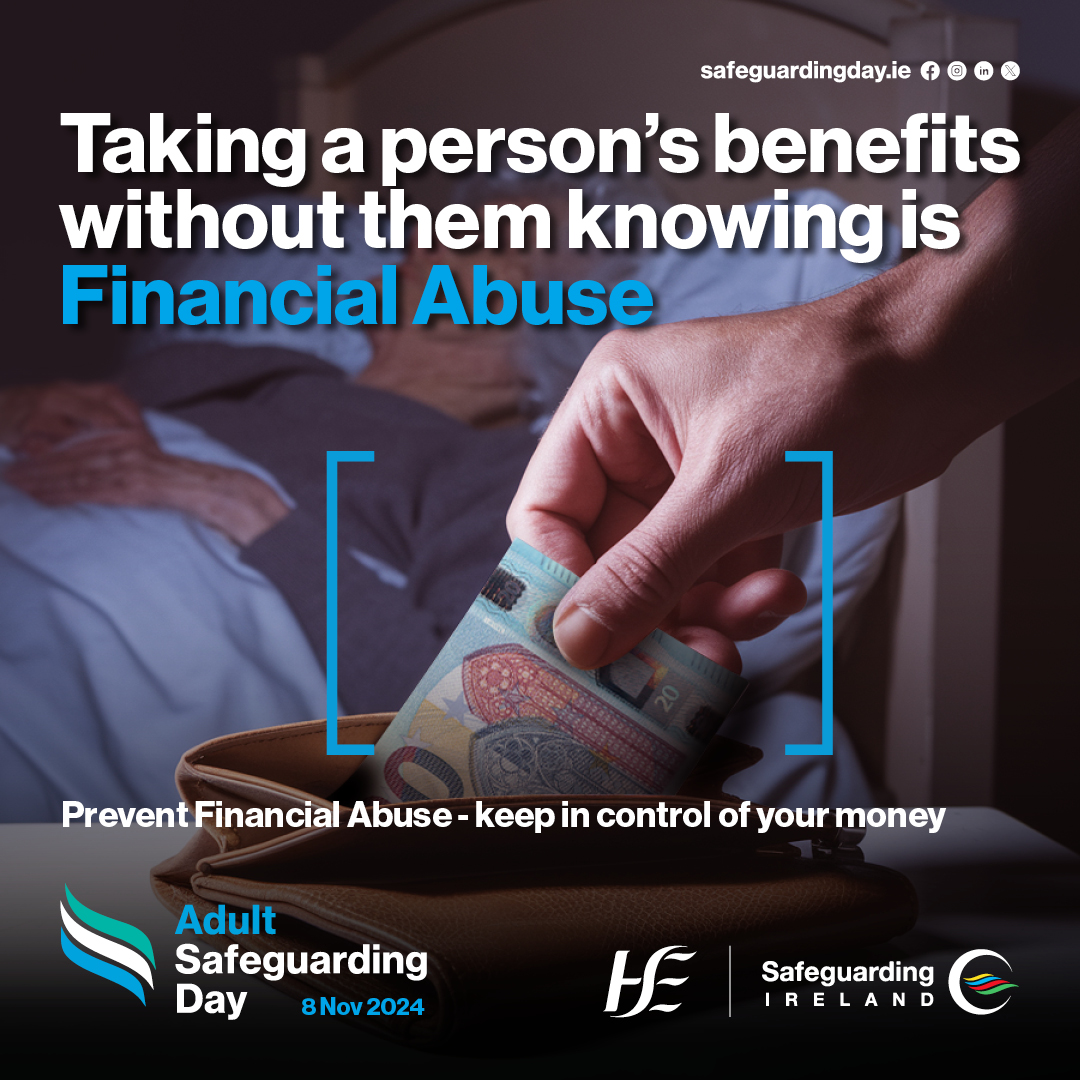
View the Adult Safeguarding Day SEMINAR presentations.
- Challenges and opportunities in preventing financial abuse – Safeguarding Ireland, Annmarie O’Connor
- A regulatory framework that secures customers’ interests – Central Bank of Ireland, Michael Hennigan
- Customer protection and the detection of early-stage dementia – UCD Smurfit Graduate Business School, Professor Cal Muckley.
Adult Safeguarding Day Badge
The campaign logo

RED C research – Nov 2024
2023 – Videos on Planning Ahead
PLAN AHEAD – Overview: EPA, Health, Decision-making
PLAN AHEAD – Advance Healthcare Directive & DHR
PLAN AHEAD – Decision Support Arrangements
PLAN AHEAD – The HSE Safeguarding Service
PLAN AHEAD – Role of the Circuit Court
2022 – Videos on Preventing Adult Abuse
SAFEGUARDING: Prevent Adult Abuse – Decision-Making.
SAFEGUARDING: Respond to Adult Abuse – the HSE.
SAFEGUARDING: Respond to Adult Abuse – the Gardaí.
SAFEGUARDING: An Independent Safeguarding Authority.
2021 – Videos on Adult Abuse & Safeguarding
What is Adult Safeguarding
Type of Adult Abuse
Institutional Abuse
Safeguarding Adults with Disabilities
Planning Ahead – Money and Budgeting
Planning Ahead – Healthcare